
Pharmaceutical Research Support Software “Research Navi” Wins the 2026 GOOD DESIGN AWARD
Updated: 2 hours ago
[TOKYO, October 27, 2026]
Also Selected for the Jury's “My Favorite G Mark 2026” — Supporting Researchers’ Decision-Making by Providing Evidence Alongside AI-Generated Answers
Ingenta Inc. (Headquarters: Minato-ku, Tokyo; hereinafter “Ingenta”) is pleased to announce that its pharmaceutical research support software, “Research Navi,” has received the 2026 GOOD DESIGN AWARD, organized by the Japan Institute of Design Promotion. Research Navi has also been selected for “My Favorite G Mark 2026,” a special exhibition featuring award-winning designs personally chosen by GOOD DESIGN AWARD jury members.
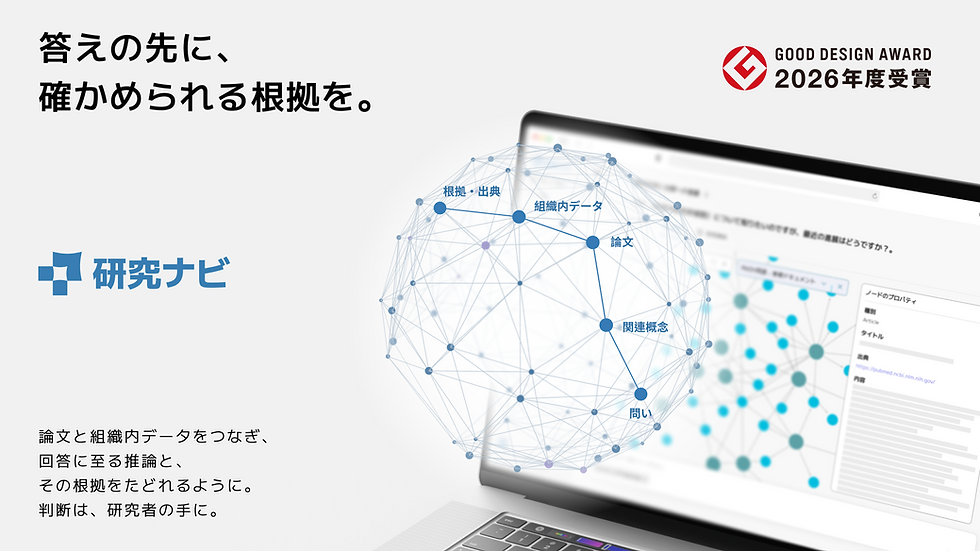
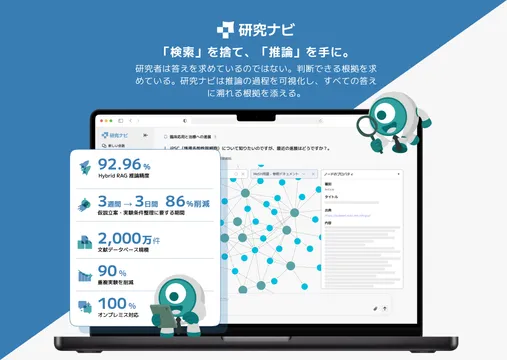
Research Navi is an AI platform that uses Graph AI to structurally connect knowledge distributed across scientific publications, patents, internal documents, and experimental data. It supports hypothesis exploration, literature research, and evidence verification in pharmaceutical research. Rather than simply providing answers, the platform is designed to enable researchers to verify the information and knowledge relationships underlying AI-generated responses.
Evaluation by the GOOD DESIGN AWARD Jury
The GOOD DESIGN AWARD jury provided the following evaluation:
One of the strengths of generative AI lies in its ability to interpret, match, and organize vast amounts of unstructured text while taking context into account. These are tasks traditionally performed by the human brain, but generative AI makes it possible to carry them out beyond human limitations. Research Navi can be regarded as an exemplary system that effectively utilizes this strength of generative AI. By visualizing connections among knowledge in the exploration and reasoning processes of pharmaceutical research, the platform is expected to make a significant contribution to advances in the field.
Also Selected for “My Favorite G Mark 2026”
Research Navi has also been selected for “My Favorite G Mark 2026,” a special exhibition in which GOOD DESIGN AWARD jury members personally choose award-winning designs that captured their attention during the second round of judging. This year, 88 designs selected by 101 jury members will be presented across three exhibition periods at GOOD DESIGN Marunouchi.
Susumu Namikawa, the jury member who selected Research Navi, provided the following comment:
One of the strengths of large language models is their ability to handle not only numerical data but also vast amounts of knowledge expressed in natural language. Research Navi takes advantage of this capability to structure relationships across extensive scientific literature and perform reasoning. I believe this approach has the potential to be applied not only to pharmaceutical research but also to a wide range of other research fields.
GOOD DESIGN AWARD Jury Member Chief AI Officer / Executive Creative Director, dentsu Japan Susumu Namikawa
In addition, a talk event featuring Chih-Chuan Lin, Producer of Research Navi, and jury member Susumu Namikawa will be held at GOOD DESIGN Marunouchi on Tuesday, November 10. For details, including the event schedule, please refer to the “Exhibitions and Events” section later in this article.
Background Behind the Development of Research Navi
In pharmaceutical research, valuable insights that may lead to new hypotheses are found not only in published scientific papers and patents, but also in internal research reports, experimental data, and records of past investigations. However, this information is accumulated across different locations and formats, requiring considerable time and specialized expertise to locate relevant materials and understand the relationships among them.
Even experiments that did not produce the expected results can provide valuable clues for future research when their conditions and decision-making processes are reviewed. Ingenta developed Research Navi to help researchers make effective use of distributed information and accumulated records of trial and error.
Key Design Features of Research Navi
Capturing Connections Among Distributed Knowledge with Graph AI
Research Navi structurally connects knowledge contained in scientific publications, patents, internal documents, and experimental data. Rather than searching for documents individually, researchers can explore relationships among information sources to identify clues for developing and evaluating hypotheses. For example, the platform enables researchers to cross-reference scientific literature related to a particular research topic with internal experimental records.
Providing Verifiable Evidence Alongside AI-Generated Answers
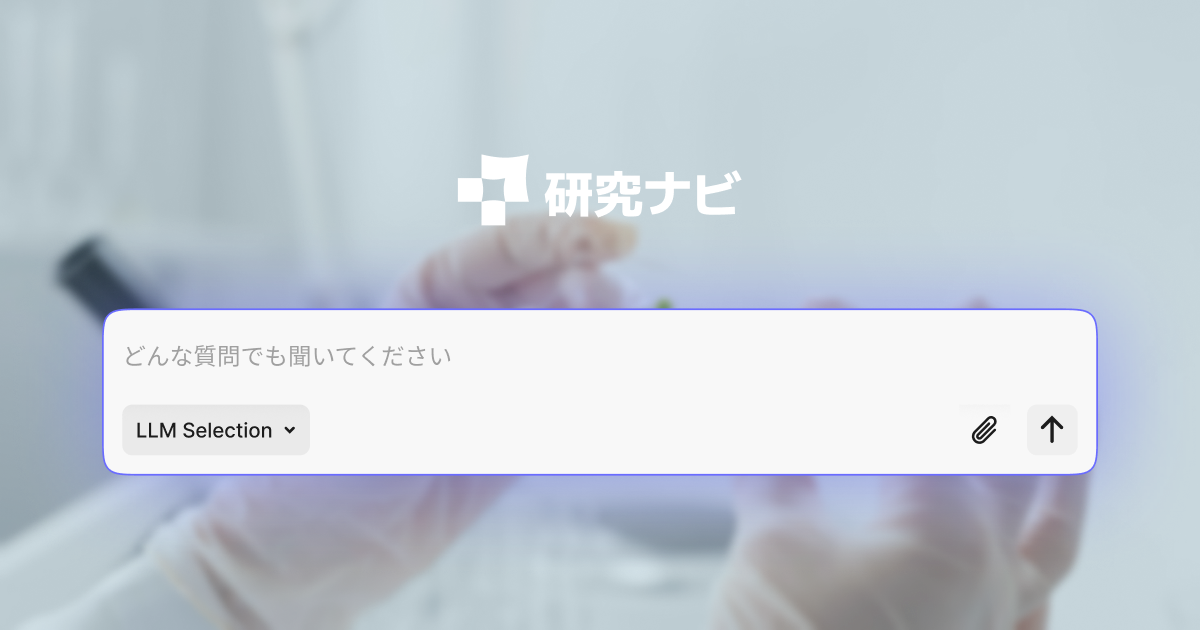
To effectively utilize generative AI in research, it is essential to verify which sources were referenced and how an answer was derived. Research Navi presents relevant scientific literature, internal data, and connections among knowledge alongside AI-generated responses. This enables researchers to examine the original sources and make informed judgments based on their own expertise.
Designing Around Researchers’ Workflows
Research Navi supports the research process as a continuous workflow, extending beyond literature review to hypothesis exploration, evidence verification, and planning for subsequent validation. By reducing the burden of searching for and organizing information, the platform aims to give researchers more time to think critically and conduct experiments.
Two Deployment Options for Protecting Research Data
While the use of generative AI in business continues to expand, the handling of confidential information remains a major challenge. Research Navi offers both a cloud-based version accessible through web browsers and an on-premises version that can operate on customers’ internal servers.
In the cloud version, document data is stored in a cloud environment located in Japan (Tokyo region), with data managed separately for each organization. Generative AI is accessed through APIs under terms that prohibit the use of input data for model training. The platform also incorporates security measures such as access permission controls, encrypted communications, and operation logs to protect research data.
The on-premises version enables organizations to use a domestically developed large language model (LLM), customized by Ingenta for medical and pharmaceutical applications, within their own internal environments without transmitting research data outside the organization.
From “AI That Provides Answers” to “AI That Supports Decision-Making”
The goal of Research Navi is not to have AI determine research conclusions. Instead, it aims to create an environment in which researchers can connect distributed knowledge, verify supporting evidence, and make their own informed decisions. Ingenta will continue to develop Research Navi through practical applications in research environments, helping transform accumulated data and lessons learned through trial and error into valuable insights for future research.
Commenting on the development of Research Navi, Chih-Chuan Lin, Vice President of Ingenta and Producer of Research Navi, stated:
"What mattered most to us in designing Research Navi was not getting researchers to 'trust' AI-generated answers, but enabling them to 'verify' those answers. In pharmaceutical research, every decision is supported by extensive scientific literature and countless rounds of trial and error, including unsuccessful experiments. We have continuously explored how to naturally guide researchers through the supporting evidence so they can apply their own expertise and make informed decisions. We are deeply honored that these efforts have been recognized. Moving forward, we will continue listening to researchers in the field and further developing AI that supports their decision-making."
Expanding the Graph AI Engine Behind Research Navi into Other Industries
Ingenta's Graph AI engine, which forms the core of Research Navi, is also being applied across a variety of industries and business operations beyond pharmaceutical research. These applications include transforming tacit knowledge into explicit knowledge in manufacturing, conducting impact analysis based on relationships among components and products, utilizing knowledge in architectural design, and supporting educational content management and AI-assisted learning for professional certification examinations. Through these initiatives, Ingenta continues to expand the practical application of structurally connected knowledge across industries.
Ingenta InsightCraft, which utilizes the same Graph AI engine, is a service designed to extract insights from customer feedback. It was developed in collaboration with the call center and marketing departments of a major pharmaceutical company, incorporating practical expertise from their operations. Users can ask questions in natural language and trace the answers back to the underlying customer statements and records. Ingenta InsightCraft has already been introduced through individual implementations and co-development projects, with plans for a full-scale SaaS rollout in the future.
Exhibitions and Events
GOOD DESIGN EXHIBITION 2026
Dates: October 31 (Sat) – November 4 (Wed), 2026
Venue: Tokyo Midtown (9-7-1 Akasaka, Minato-ku, Tokyo)
Details: https://www.g-mark.org/
Research Navi will be featured in a panel exhibition and is also scheduled to be presented in the organizer's “My Favorite G Mark” exhibition area.
GOOD DESIGN AWARD Jury Selection: My Favorite G Mark 2026 — Period 2 “Making Things That Create the Future”
Dates: October 31 (Sat) – November 13 (Fri), 2026, 11:00–20:00 (until 17:00 on the final day)
Venue: GOOD DESIGN Marunouchi (1F, Shin-Kokusai Building, 3-4-1 Marunouchi, Chiyoda-ku, Tokyo)
Admission: Free, no reservation required
Details:
A working demonstration of Research Navi will be available at the venue, allowing visitors to experience the platform firsthand.
Talk Event Information
”Structuring a Sea of Literature — What Does It Mean for AI to ‘Read’?”
As part of the related programming for the GOOD DESIGN AWARD jury selection exhibition “My Favorite G Mark 2026,” a special talk event focusing on Research Navi will be held.
The event will feature Chih-Chuan Lin, Producer of Research Navi, and Susumu Namikawa, the GOOD DESIGN AWARD jury member who selected Research Navi for “My Favorite G Mark.”
• Date & Time: Tuesday, November 10, 2026, 19:00–20:00
• Venue: GOOD DESIGN Marunouchi
• Topic: “Structuring a Sea of Literature — What Does It Mean for AI to ‘Read’?”
• Speakers: Chih-Chuan Lin (Producer, Research Navi) Susumu Namikawa, (GOOD DESIGN AWARD Jury Member) • Participation: No reservation required
Award Overview
About the GOOD DESIGN AWARD
Established in 1957, the GOOD DESIGN AWARD is Japan's only comprehensive design evaluation and recommendation program. It recognizes a wide range of tangible and intangible designs, including products, architecture, services, systems, and regional initiatives. The G Mark, the symbol of the award, is widely recognized as an emblem of good design. The year 2026 marks the 70th edition of the award. (Organizer: Japan Institute of Design Promotion)

About Research Navi
Research Navi welcomes inquiries from companies and research institutions involved in pharmaceutical research regarding implementation and deployment. Information regarding applications for Proof of Concept (PoC) implementations will be announced soon.
About Ingenta Inc.
Ingenta Inc. is an AI technology company specializing in achieving the accuracy required for real-world deployment of advanced AI technologies and providing end-to-end implementation support. In addition to Deep Learning, Ingenta has extensive experience in implementing solutions for research and development and business optimization through the analysis and utilization of complex knowledge structures using Graph AI.
Ingenta develops solutions that balance accuracy and practical implementation in highly specialized fields, including healthcare, pharmaceuticals, and manufacturing. Drawing on expertise from Japan and overseas, the company provides flexible AI implementation support tailored to each organization's specific challenges. In 2026, Ingenta was selected as a finalist for the GENIAC-PRIZE, a generative AI social implementation initiative led by Japan's Ministry of Economy, Trade and Industry (METI) and the New Energy and Industrial Technology Development Organization (NEDO).

Contact Information
Ingenta Inc.
Mitsuyoshi Okamoto Business Development Manager
The information contained in this press release is accurate as of the date of publication and is subject to change without prior notice.


